 📞 (706) 502-0831 📞 (706) 502-0831
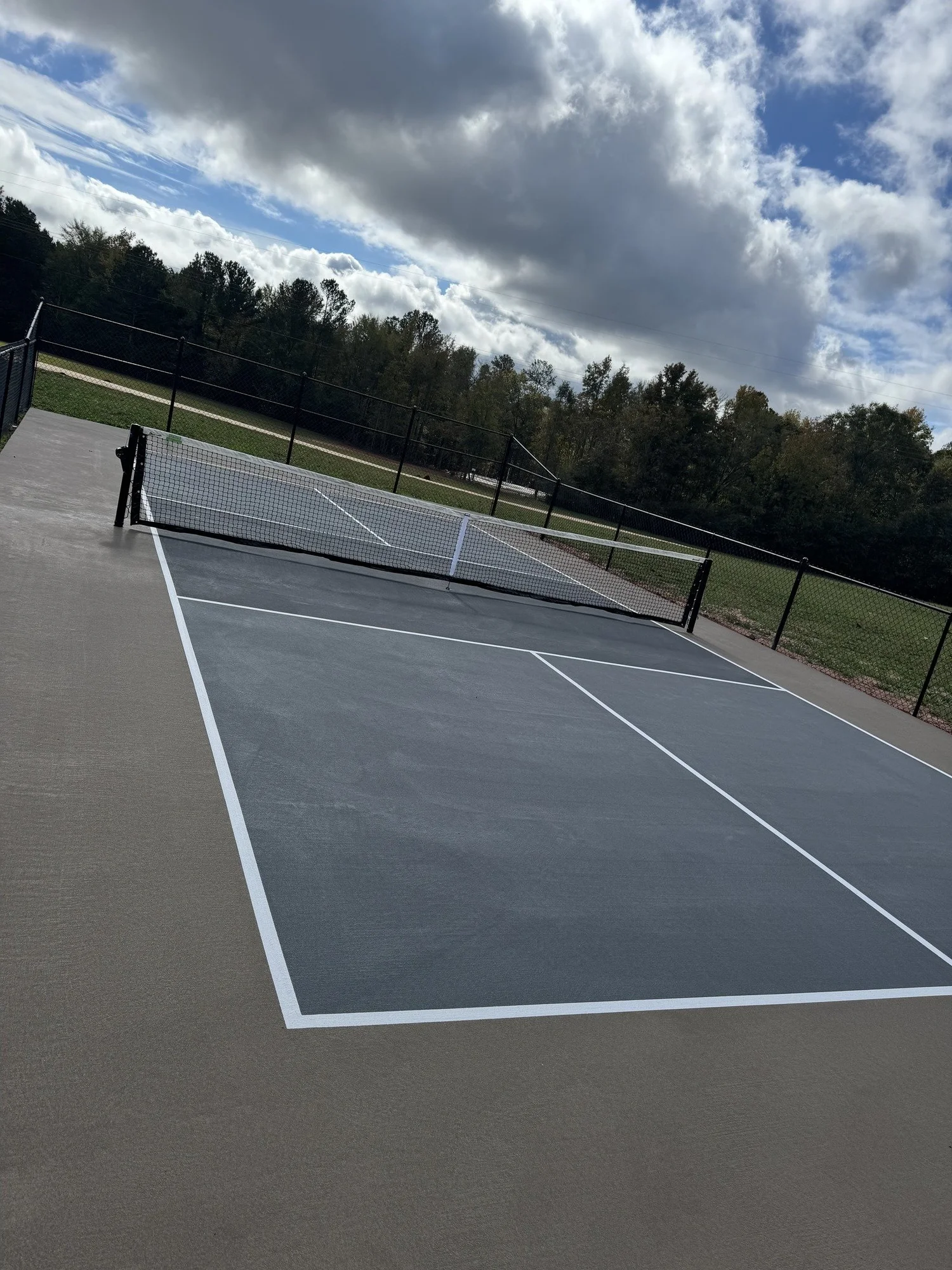
To ensure proper playability and dimensions, a pickleball court typically requires an overall playing space of at least 30 feet by 64 feet. The standard dimensions of a pickleball court are 20 feet wide by 44 feet long. However, all courts can be made custom to your desire.
The lifespan of a pickleball court largely depends on various factors such as usage, maintenance, and the type of surface material used for the court. However, a pickleball court could last between 4 to 8 years on average before requiring a resurface. Generally, concrete surfaces offer more durability that increases the lifespan of a pickleball court compared to asphalt surfaces.
Regular maintenance is crucial in extending the lifespan of a pickleball court. Proper maintenance helps to prevent the wear and tear on the surface that might ultimately reduce its lifespan. We will explain all post installation requirement on your initial consultation.
The time required to install a pickleball court can vary depending on several factors, such as the scope of the project, the type of court surface, and the availability of resources. Generally, the process of building a pickleball court can take 3-4 weeks to complete.
The cost of building a pickleball court can vary depending on several factors, such as the court's size, type of surface, and additional features and accessories required. We will custom quote you upon our initial conversations.
Permit requirements can vary by location and the specifics of the project. It's always a good idea to check with your local city or county office to understand the regulations in your area. We can also assist you in this process during the consultation.
Permit requirements depend on your specific city or county, and homeowners in Fulton County, Cobb County, and Forsyth County often face different review processes for court construction, especially when the project includes fencing, lighting, or drainage changes. Many neighborhoods throughout the Roswell, Alpharetta, and Milton area also fall under HOA jurisdiction, which means a court project may need architectural review approval in addition to any municipal permit.
Because Peachtree Pickleball Courts works across this part of metro Atlanta regularly, we help homeowners and community boards understand what documentation is typically requested before work begins. We discuss these requirements during your initial consultation so there are no surprises once construction is scheduled.
Yes, soil composition matters a great deal in our region. Much of Fulton, Cobb, and Forsyth County sits on dense Georgia red clay, which drains differently than sandy or loamy soils and can shift slightly with heavy seasonal rainfall. This makes proper excavation, grading, and base preparation especially important before any asphalt or concrete surface is poured.
Our team accounts for local clay conditions when planning site work, including how the court pad is graded to encourage water runoff away from the playing surface. Addressing drainage early helps protect the long term stability of both new court construction and tennis to pickleball conversions.
Many properties throughout the Roswell area already have an existing tennis court, and converting that space is often a practical way to add pickleball without needing additional land. A single tennis court can typically accommodate multiple pickleball courts, which is appealing for HOA communities and homeowners who want to maximize an existing footprint.
Conversion work usually involves new surface striping, net system changes, and sometimes resurfacing to address cracking or wear that has developed over time. We evaluate the condition of the existing tennis surface during the consultation to determine whether resurfacing should happen before or alongside the conversion.
The climate across Roswell, Alpharetta, Marietta, and the broader metro Atlanta area includes hot, humid summers and periodic heavy rain, along with occasional freeze and thaw cycles in winter. These seasonal swings can stress a court surface over time, particularly around joints, edges, and areas with poor drainage.
Choosing a surface material suited to our local climate and maintaining the court properly can help reduce the effects of expansion, contraction, and surface wear. Whether you are planning a private residential court, a commercial facility, or a shared HOA amenity, we take regional weather patterns into account when recommending surface options and site preparation steps.
If you have questions about how climate or soil conditions in your specific neighborhood might affect a new build or resurfacing project, call Peachtree Pickleball Courts at (706) 502-0831 to schedule a consultation.
Talk with Peachtree Pickleball Courts about your property, your goals, and the court you have in mind. We bring pickleball to you.